Mitochondrial Skin Lotion · Worn Beneath Sunscreen · by Sunumbra®
Our planet's shield
is failing.
Your cells need
to be ready.
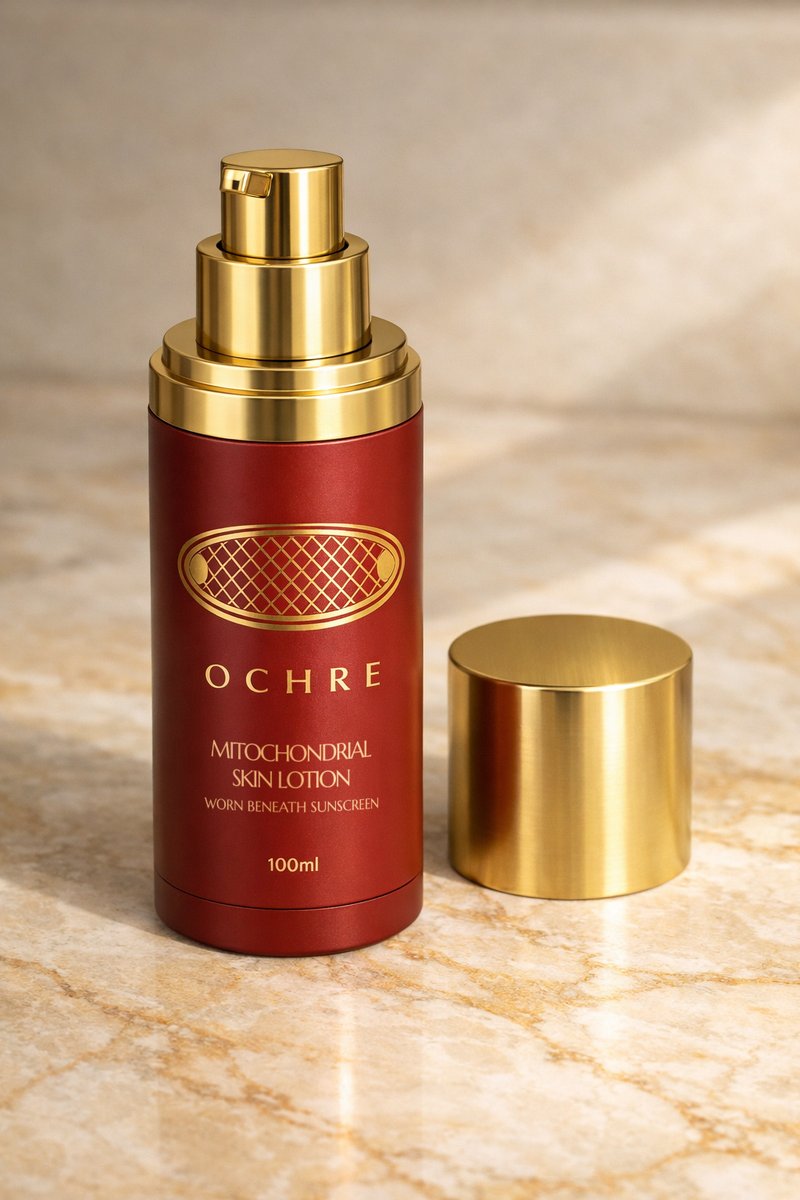
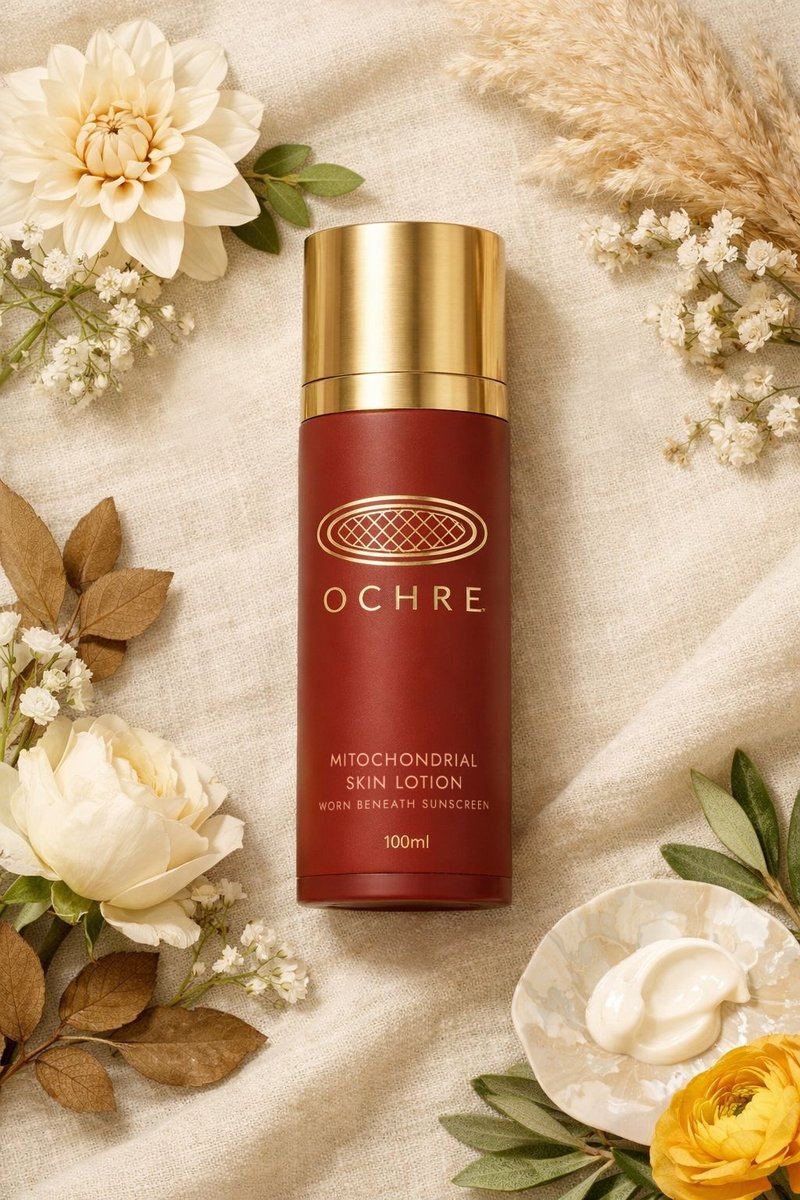
OCHRE™ is a mitochondrial skin lotion with ten research-selected actives, made to be worn beneath your sunscreen. Not a sunscreen. The biological layer beneath its logic.
From Sunumbra® — grounded in 12 years of topical sunscreen formulation research transitioning to radiation recovery skincare for cancer patients in January 2014. OCHRE™ applies that science to everyone living under a weakening magnetic shield.

The Planetary Threat
The invisible shield
above you is
thinning
For the duration of life on earth, including the last 200,000 or so years since ‘modern’ humanity evolved, Earth’s geomagnetic field has shielded life from the full force of cosmic and solar UV radiation. That shield is now measurably weaker — and it is weakening faster.
ESA's Swarm satellite data confirms the South Atlantic Anomaly — a vast region of magnetic weakness stretching across the South Atlantic — grew by nearly half the size of continental Europe between 2014 and 2025. In 2025 alone, it expanded a further 8%, according to the NOAA World Magnetic Model Annual Report (January 2026).
The northern magnetic pole is drifting toward Siberia at 36 kilometres per year. The weakening is not localised. It is global. And it has a direct consequence for every human being alive today: greater UV radiation reaching the Earth's surface.
9%
Weakening of Earth's magnetic field over the past 170 years
8%
South Atlantic Anomaly expansion in 2025 alone (NOAA WMM 2026)
36km
Annual drift of magnetic north pole toward Siberia
Epidemiological data link higher surface UV to higher melanoma incidence (Scientific Reports, 2025; ref 04). Sunscreen, shade and skin checks remain your first line of defence.
The Film
Two minutes that explain everything.
41,000 Years Ago
Our ancestors
faced this before.
Ochre was their answer.
During the Laschamps geomagnetic excursion — 41,000 years ago — Earth's magnetic field collapsed to approximately 10% of its current strength. Cosmic radiation surged. UV levels spiked to levels unrecorded in modern human experience.
Early Homo sapiens did not sit passively. They applied ochre — an iron-rich mineral pigment — to their skin, most likely as an early form of topical skin care against the sun. They retreated to caves. They adapted. Research from the University of Michigan (2025) documents the population bottleneck and behavioural shifts of this period, with ochre use emerging as a deliberate survival technology.
We are entering a new magnetic excursion. Not as severe — not yet — but measurable and accelerating. The human body's defences have not kept pace. OCHRE is the modern answer to an ancient problem.
Formulated by Sunumbra®
OCHRE is the result of 12 years of topical formulation research that began in January 2014 — originally developed as restorative skincare for cancer patients recovering from radiation burns. That work established the deep evidence base for what UV radiation does to skin at the cellular level, and what topical actives can do to address it. OCHRE applies that science to everyone living under a weakening magnetic shield.
41,000 BC — Laschamps Excursion
Earth's magnetic field drops to 10% strength. UV radiation surges globally. Evidence suggests early humans likely used ochre on their skin and sought shelter in caves.
1850–2024 — Modern Weakening Begins
Earth's magnetic field weakens by 9%. The South Atlantic Anomaly forms and accelerates. Global UV radiation trends upward.
Today — The Cellular Imperative
Conventional sunscreen filters UV at the surface. Research shows the cell's own UV response is energy-dependent. OCHRE's actives were selected from that research.
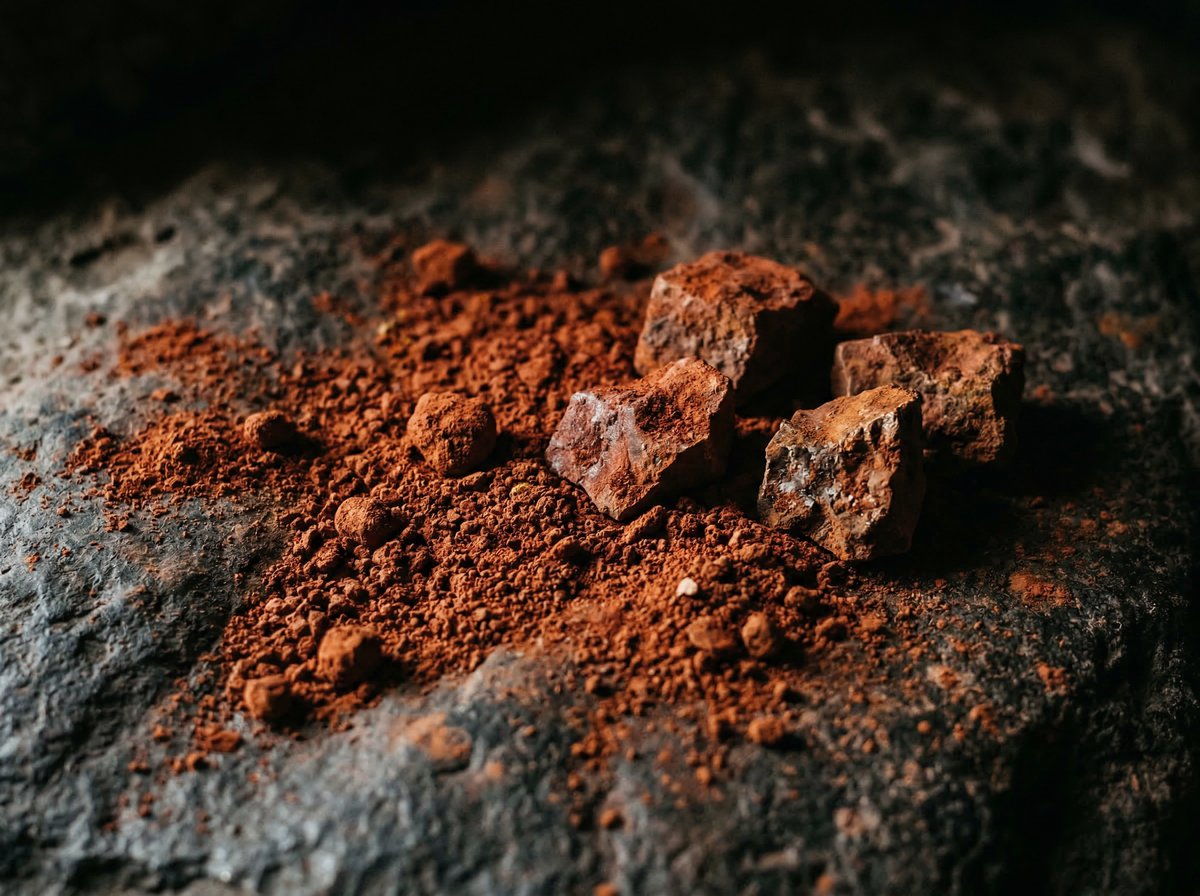
Ochre — iron oxide pigment that early Homo sapiens likely used on skin during the Laschamps geomagnetic excursion, 41,000 years ago.
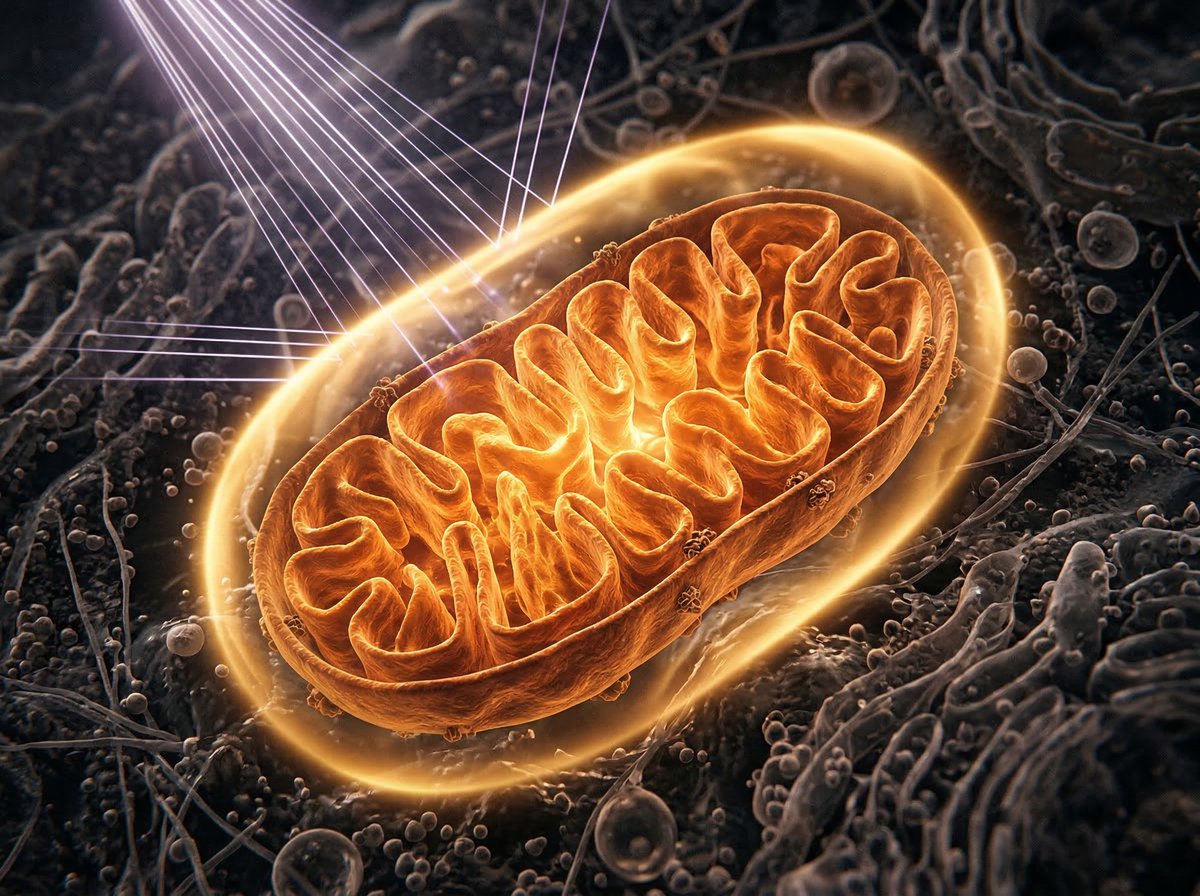
The Cellular Mechanism
UV radiation does not
just burn the surface.
It fragments your mitochondria.
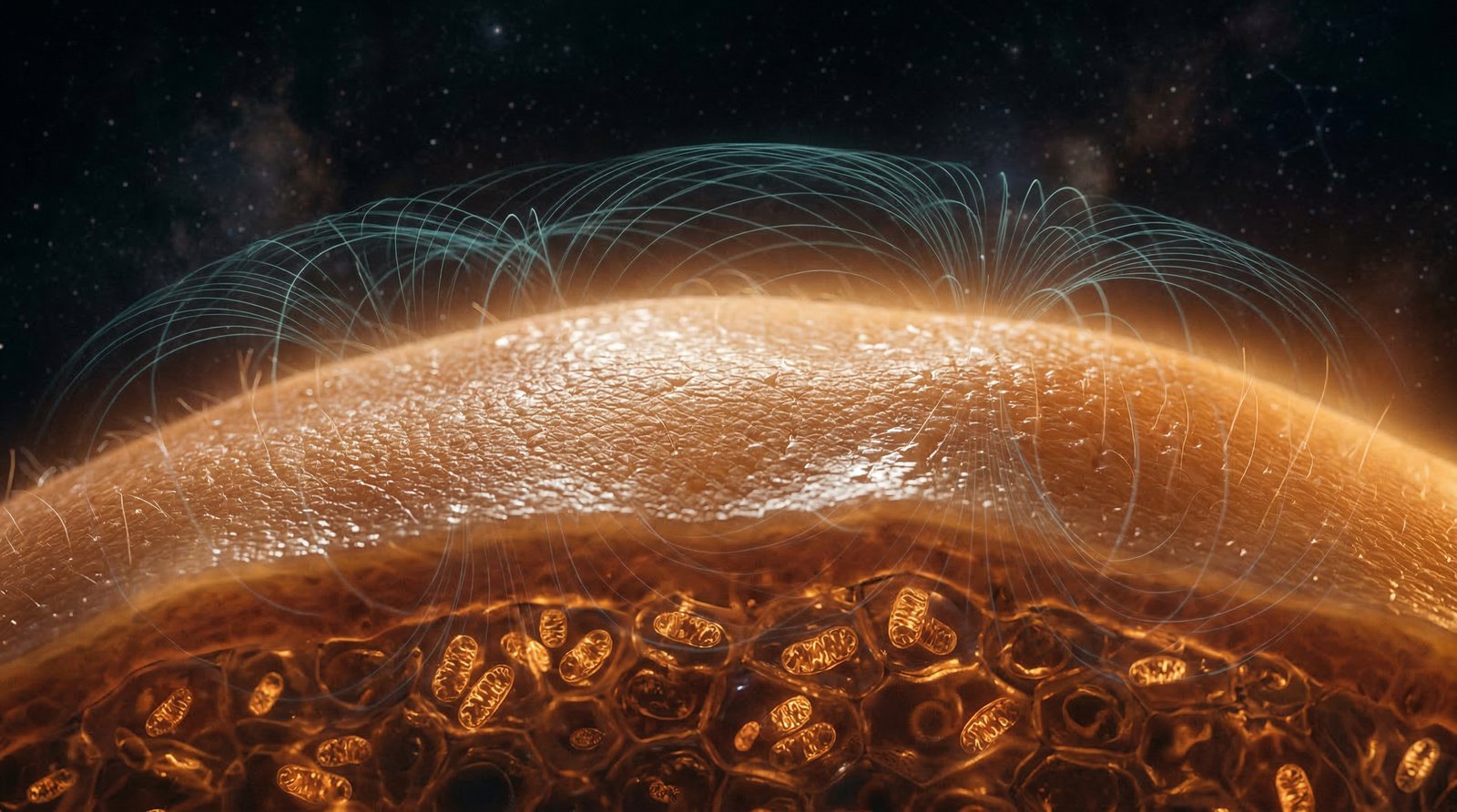
Research published in Scientific Reports (Kim et al., 2024) used STED super-resolution nanoscopy to observe, in real time, what UV radiation does to dermal fibroblasts. The mitochondria — your cells' energy generators — fragment under UV exposure.
Fragmentation means reduced ATP production. Reduced ATP means your cells cannot power the processes that protect and repair them: DNA damage repair, collagen synthesis, inflammatory regulation. A feedback loop of cellular decline begins.
This is a part of UV stress that sunscreen isn't designed to address. OCHRE is a daily lotion built around this research, worn beneath your sunscreen.
UV penetrates the epidermis
UVA particularly reaches dermal fibroblasts. Conventional filters reduce but cannot eliminate this.
Mitochondria fragment
UV triggers mitochondrial fragmentation in dermal cells — directly reducing ATP output and increasing reactive oxygen species (ROS).
Energy-dependent processes come under strain
DNA repair, collagen synthesis and inflammation control all require ATP. When cellular energy supply falls, these processes are placed under greater strain.
OCHRE is formulated to support the energy base
Ten actives selected from published research on mitochondrial antioxidant, energy, autophagy and biogenesis pathways — a daily lotion worn beneath your sunscreen.
An antioxidant regeneration cycle
OCHRE is built around an antioxidant regeneration cycle: Active 04 helps regenerate Active 10, which helps regenerate Active 09, which scavenges the mitochondrial ROS triggered by UV. Plants and animals that live under solar radiation rely on antioxidant cycles like this one. OCHRE is formulated around the same logic.
The Formula
OCHRE™
Ten actives.
One precise purpose.
Ingredient identities are withheld pending patent application. Each active is referenced by number and mechanism only.
Every ingredient in OCHRE is chosen for one reason: published research relevant to mitochondria under UV stress. No filler. No trend-chasing. Each active is selected for research on its subcellular role — some used at hundredths of a percent, in line with that research. Together they reflect a multi-pathway approach drawn from mitochondrial science, combining antioxidant, autophagy, biogenesis and energy pathways in one formula.
Active 01
OCTN1 Mitochondrial Transport · Nrf2 Pathway
A rare amino acid found in fungi, transported directly into mitochondria and the nucleus via the OCTN1 transporter. Studied in lab research for its role in the Nrf2 antioxidant pathway. The body cannot make it, so it normally comes from diet.
Evidence basis: Selected with reference to published OCTN1-mediated uptake and Nrf2 pathway activation studies
Active 02
Autophagy / Mitophagy · mTORC1 Pathway
A naturally occurring compound found in human cells. In published lab research it is studied for activating the recycling of dysfunctional mitochondria (mTORC1), and has been shown to activate cytoprotective autophagy across multiple model organisms (lab and model-organism studies).
Evidence basis: Selected with reference to published mTORC1-mediated autophagy induction and cytoprotective studies
Active 03
mTOR-Independent Autophagy · Studied in UVB-Stressed Cells
A natural disaccharide that activates autophagy through a distinct, mTOR-independent pathway (TFEB), complementing Active 02. Published lab studies report greater autophagosome formation and less UV-induced cell death in UVB-exposed keratinocytes pretreated with this disaccharide (ref 06).
Evidence basis: Selected with reference to published TFEB-mediated autophagy induction and UVB keratinocyte protection studies
Active 04
Mitochondrial Membrane Antioxidant · Vitamin Regeneration
The primary antioxidant embedded in the mitochondrial membrane itself. Nano-encapsulated to help it absorb into the skin's upper layers. Critically, Active 04 regenerates Vitamins C and E after they have been oxidised — amplifying the effect of the entire antioxidant network.
Evidence basis: Selected with reference to published mitochondrial membrane antioxidant and vitamin regeneration studies
Active 05
Carotenoid · Membrane Antioxidant
A potent antioxidant carotenoid from microalgae. Taken orally, this carotenoid has been reported in human studies to raise the Minimal Erythema Dose. OCHRE uses it topically, and this does not replace SPF. Spans the full length of the mitochondrial membrane.
Evidence basis: Selected with reference to published Minimal Erythema Dose elevation and bilateral radical scavenging studies
Active 06
Mitochondrial Biogenesis Research · PGC-1α
A redox cofactor that, in published research, stimulates PGC-1α, the master regulator of mitochondrial biogenesis. Active 06 was selected because it is studied for signalling cells to create new mitochondria — quantity as well as quality.
Evidence basis: Selected with reference to published PGC-1α activation and mitochondrial biogenesis studies
Active 07
Botanical Antioxidant · Studied in UV-Stressed Skin
Extract from a tropical fern. Published studies on this fern extract report reduced UV-induced mitochondrial DNA damage and fewer sunburn cells in study conditions (ref 06). These are ingredient studies, not studies of OCHRE.
Evidence basis: Selected with reference to published studies of this botanical antioxidant in UV-stressed skin
Active 08
NAD⁺ Precursor · Energy & Barrier Research
A vitamin B3 precursor to NAD⁺, a coenzyme cells use in energy and repair processes. Published research shows UV exposure depletes cellular NAD⁺. Also studied for supporting the skin barrier.
Evidence basis: Selected with reference to published NAD⁺ replenishment and barrier-strengthening efficacy studies
Active 09
Intramitochondrial ROS Scavenger · Superior Vitamin E
The intramitochondrial fraction of Vitamin E — structurally superior to standard alpha-tocopherol due to its unsaturated side chain, which allows faster mobility within the mitochondrial membrane and more rapid neutralisation of reactive oxygen species (ROS) at the source of their generation. Regenerated by Active 10 — completing the antioxidant cycle.
Evidence basis: Selected with reference to published intramitochondrial ROS scavenging and antioxidant cycle studies
Active 10
Antioxidant Regeneration Cycle · Liposomal Delivery
A water-soluble antioxidant vitamin encapsulated in negatively charged phospholipid liposomes. In a published lab study, negatively charged liposomes increased dermis retention of this vitamin 5.1× versus its free form (Maione-Silva et al., 2019). In OCHRE's antioxidant network, Active 04 helps regenerate it, and it in turn helps regenerate Active 09. A 2024 skin-explant study of a different liposomal antioxidant complex reported lower IL-6 (−39%), IL-8 (−50%) and MMP-9 (−39%). These figures are from lab studies, not from OCHRE.
Evidence basis: Selected with reference to published liposomal dermis retention and antioxidant cycle efficacy studies
The Product
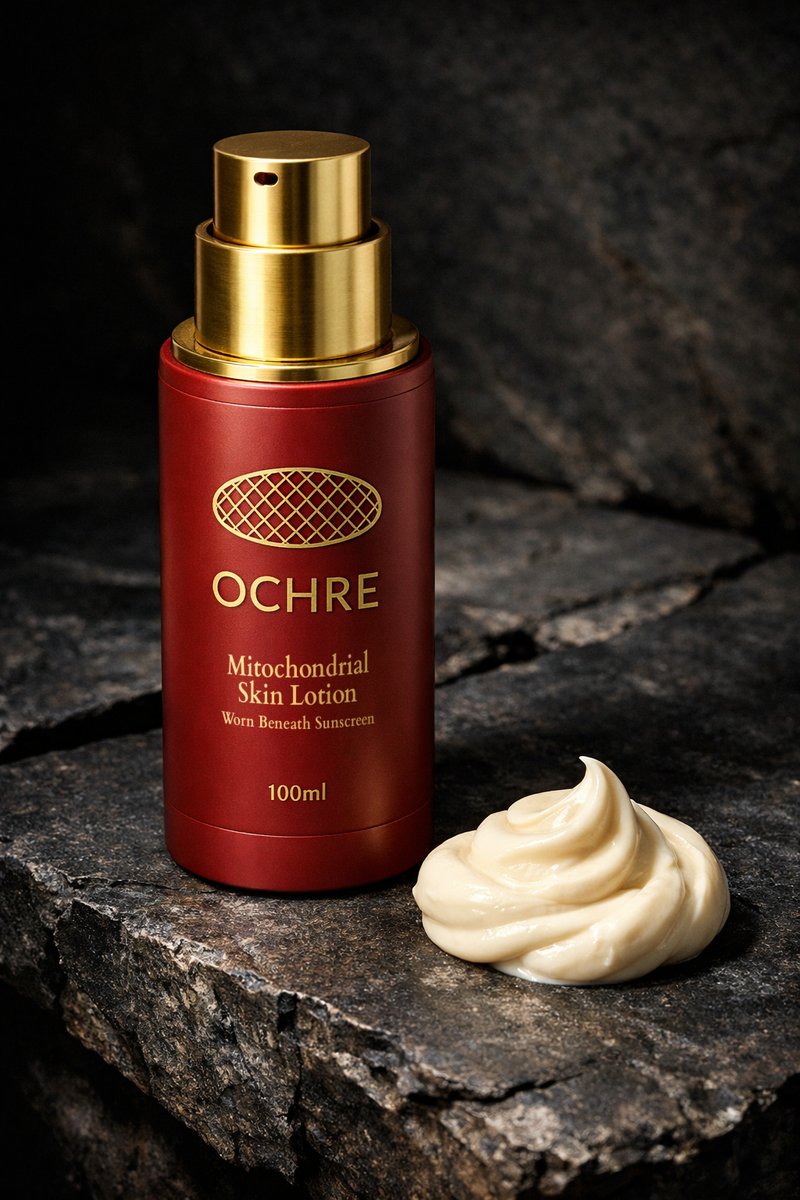

Mitochondrial Skin Lotion
OCHRE is not a sunscreen. It works alongside any UV filter you choose to use — as the biological layer beneath it. Apply daily to face and exposed skin. Phosphatidylcholine liposomes are designed to help the actives absorb into the skin's upper layers.
OCHRE is built around published research on how skin cells' energy and antioxidant systems respond to daily UV stress. Always used together with your sunscreen.
Each 100ml bottle contains ten actives, each selected on the basis of published research, delivered in a dual-phase emulsion with phosphatidylcholine liposomes — designed to help the active payload absorb into the skin.
Airless pump dispenser — 100ml, polypropylene with EVOH barrier
10 research-selected actives
Not a UV filter. Not a sunscreen replacement
Absorbs fully, with a weightless finish. Use it beneath your sunscreen, and keep reapplying sunscreen as directed.
Developed for all people, all skin types the world over
Fragrance-free. No endocrine-disrupting filters
Matte soft-touch finish · Brushed gold zinc alloy actuator
DTC (direct to consumer) optimised — lightweight, impact-resistant, ships globally
Launch Price
$95
Per 100ml. Register below for priority access and founding-member pricing.
Why $95?
OCHRE is 100ml. Ten actives, each sourced at high purity from specialist manufacturers, delivered via a phosphatidylcholine liposome system.
Ten actives in one 100ml bottle, at $0.95/ml.
Ten actives. Not ten products.
Ten actives working together is not ten times one active. It is a system.
Actives 04 and 06 were selected from research on mitochondrial energy pathways. Actives 01 and 05 are antioxidants. Active 02 was chosen from lab research on mitophagy, the cell's recycling of worn-out mitochondria. Active 03 was chosen from research on cell resilience under stress. Active 07 is a botanical antioxidant studied in UV-stressed skin. Active 08 is a vitamin B3 precursor to NAD⁺, a coenzyme cells use in energy and repair processes. Actives 09 and 10 protect the lipid membrane and extracellular matrix that house the system.
Remove any one and the sequence has a gap. That's why each one is there.
This cannot be replicated by layering individual serums. The ratios, the delivery system, and the phase architecture are designed as a whole. One bottle. One application. One formula, designed as a whole. That is the premium.
OCHRE’s active development is nearing completion. Register below to receive launch notification, founding-member pricing, and access to the full scientific dossier.
No spam. No data sold. One email when OCHRE is ready, with intermittent progress reports.
Scientific Foundation
Selected References
OCHRE's formulation philosophy and brand narrative are built on peer-reviewed science. Key scientific statements on this site are referenced below.
01
Kim et al. (2024). UV-induced mitochondrial fragmentation in dermal fibroblasts visualised by STED nanoscopy. Scientific Reports (Nature Portfolio; doi:10.1038/s41598-024-55778-z).
02
ESA Swarm Mission (2025). South Atlantic Anomaly growth analysis: Physics of the Earth and Planetary Interiors. Anomaly expanded by nearly half the size of continental Europe since 2014.
03
NOAA World Magnetic Model Annual Report (January 2026). South Atlantic Anomaly expanded 8% in 2025 alone. Magnetic north pole drifting at 36 km/year toward Siberia.
04
Feng F, Ma Y, Zhao Y, Wan Z, Zhang R, Yang S (2025). Global assessment of surface ultraviolet radiation and malignant skin melanoma incidence from 1990 to 2021. Scientific Reports 15:39300 (doi:10.1038/s41598-025-23066-z). In the paper's Europe subgroup analysis (Western, Central and Eastern Europe, 1990–2021), each 1 W/m² increase in surface UV radiation was associated with an 89% higher relative risk of melanoma in males (RR 1.89, 95% CI 1.73–2.06) and a 69% higher relative risk in females (RR 1.69, 95% CI 1.54–1.86).
05
University of Michigan (2025). Behavioural and demographic responses of early Homo sapiens during the Laschamps geomagnetic excursion (41,000 BP), including ochre use as UV protection.
06
Multiple sources (2020–2024). Published lab research on autophagy in UV-stressed skin cells. Active 07 extract reduces sunburn cell formation in topical ingredient studies. Mitochondria-targeted antioxidants have shown greater activity than standard antioxidants in lab studies.
07
Maione-Silva et al. (2019). Ascorbic acid encapsulated into negatively charged liposomes exhibits increased skin permeation, retention and enhances collagen synthesis by fibroblasts. Scientific Reports 9:522 (PMC6345870; doi:10.1038/s41598-018-36682-9). In vitro / ex vivo.
08
Lin JY, Selim MA, Shea CR, Grichnik JM, Omar MM, Monteiro-Riviere NA, Pinnell SR (2003). UV photoprotection by combination topical antioxidants vitamin C and vitamin E. J Am Acad Dermatol 48(6):866–874. In published research, vitamins C and E applied together gave more antioxidant protection than either alone (Lin et al., 2003).
09
Clinical, Cosmetic and Investigational Dermatology (2024). Liposome-encapsulated antioxidant complex (including a carotenoid) vs. free form in irradiated human skin explants: 39.3% IL-6 reduction, 49.8% IL-8 reduction, 38.5% MMP-9 reduction. Free antioxidant form: no significant effect.